
Soybean scouting starts early and changes all season
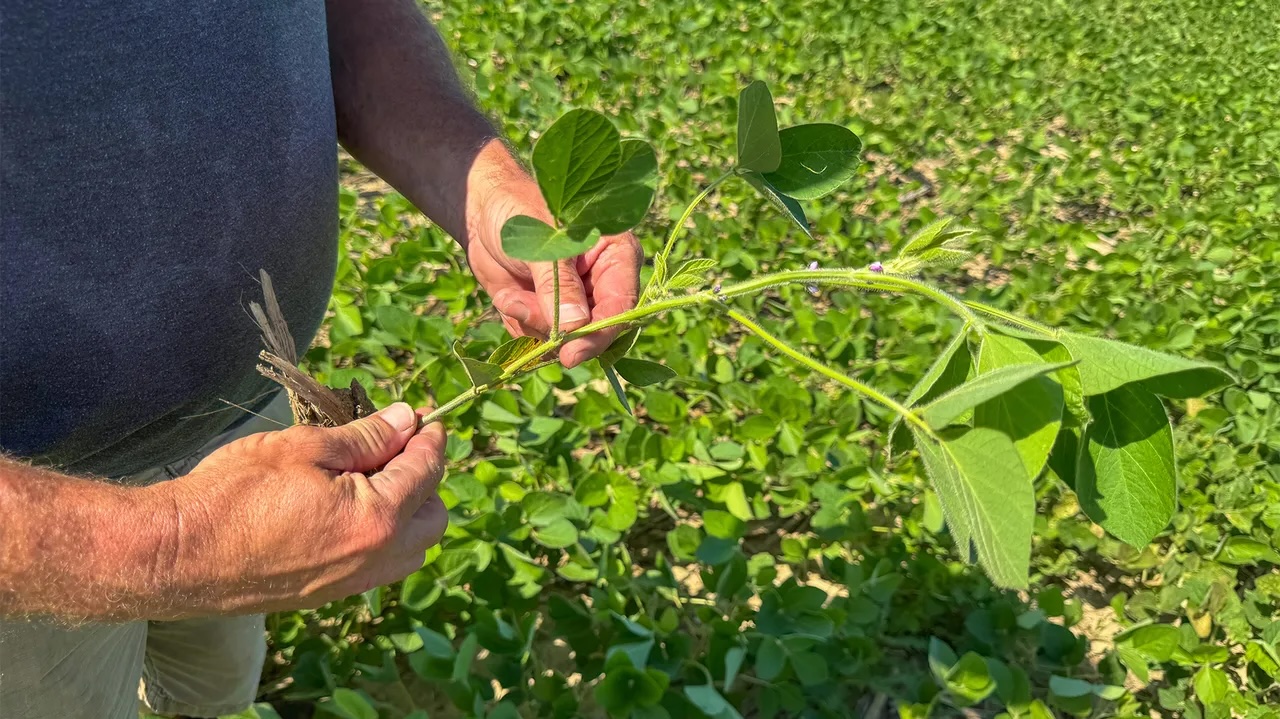
The Indiana Certified Crop Adviser panel includes Gene Flaningam, Flaningam Ag Consulting, Vincennes; Carl Joern, Pioneer, Lafayette; and Greg Kneubuhler, G&K Concepts, Fort Wayne.
My daughter is home from Purdue for the summer and plans to do all our crop scouting. Which pests are projected to be widespread in soybeans this year, and when should she be scouting for them?
Flaningam: Start scouting at emergence to evaluate stands. Evaluate weed control about 10 to 14 days after emergence. Weeds less than 6 inches tall are more ideal to control. Make a midseason scouting trip to evaluate weed control and insect feeding before reproductive stages. If you are timing a fungicide application at R3, scout at about R2. Evaluate disease pressure and insect feeding on the leaves. Scout those soybeans again at R5 to evaluate late-season disease and insect pressures.
It is hard to forecast specific disease and insect infestations for the upcoming year. Follow the Purdue Pest and Crop Newsletter, a seed company newsletter or your local retail supplier for specific pest outbreaks as the season progresses.
Joern: Your daughter has the perfect opportunity to learn that soybeans don’t deal with the same pests all season long. The pest complex shifts from early‑season seed and seedling issues to midseason canopy pests and diseases.
Early in the season through VE and V2, she should focus on the insects and diseases that take out stands before they ever get started. Seed corn maggot, wireworms and white grubs are the big three, especially in cool, wet or high‑residue conditions. Pythium, phytophthora, fusarium, and rhizoctonia are also in play when soils stay cold or saturated — all capable of damping off and wiping out patches before the crop even gets established.
Once soybeans are into midseason, the concerns shift. Purdue entomologists have emphasized that a lot of growers toss a pyrethroid into their R3 fungicide pass without scouting, but midseason insect levels today are often lower than they used to be. She should verify a problem before recommending an insecticide.
Her midseason focus should be on defoliators like Japanese beetles and bean leaf beetles, stinkbugs, and any evidence of canopy feeding, especially as the crop approaches R1 to R3.
Disease scouting also ramps up midseason. White mold risk climbs at flowering, especially under irrigation, and frogeye leaf spot risk increases heading into R3. She will miss the fun of late-season scouting for stem diseases like brown stem rot, sudden death syndrome and red crown rot.
With a sharp eye and good timing, she’ll learn more in one summer than most folks do in years — and she’ll help you make the right calls when it counts.
Kneubuhler: That’s a difficult question to answer until the season gets underway. A simple calendar of what pests to look for and when can be very helpful. Soybean scouting usually comes in waves during the season. The first starts with VE to V3. The second wave is vegetative to early reproductive, or V4 to R2. Third wave is midseason, or R1 to R4. And last is late season, or R3 to R6.
A simple scouting calendar for each wave includes:
- slugs, bean leaf beetles and stand loss
- Japanese beetles and other defoliators
- soybean aphids
- pod feeding beetles
Good scouting in this situation can be very profitable rather than just automatic treatments. Often, fields don’t reach treatment thresholds, so proper scouting can really be beneficial when it comes to a return on investment.